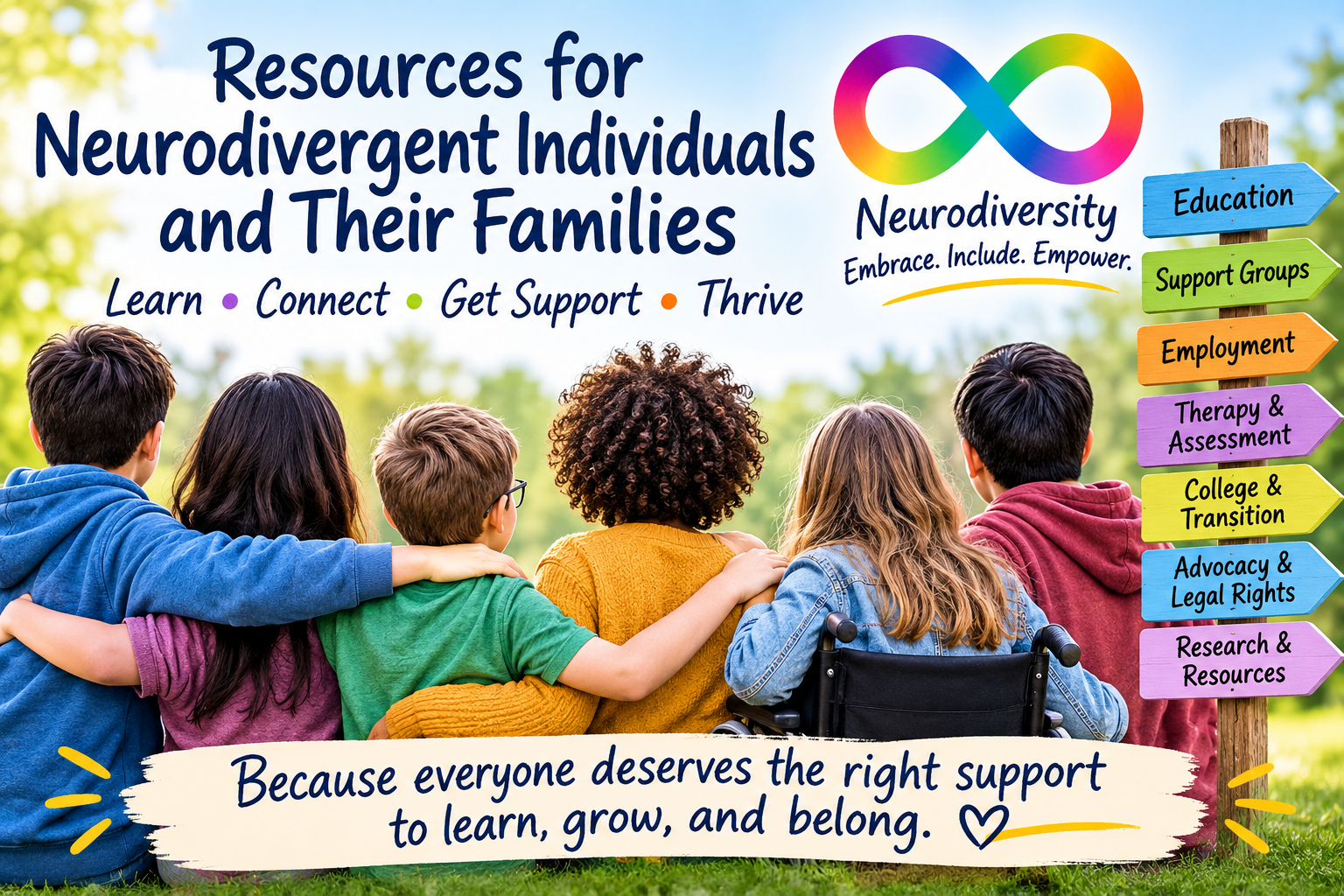
Resources for Neurodivergent Individuals and Their Families
Connecting individuals, families, caregivers, educators, and professionals with information, services, and opportunities to thrive.
Neurodivergence encompasses a wide range of neurological differences, including autism, ADHD, dyslexia, dyspraxia, sensory processing differences, and other variations in how individuals think, learn, communicate, process information, and experience the world.
Finding the right information, services, and support can make a meaningful difference at every stage of life. The following resources offer educational materials, peer support, professional directories, employment guidance, educational opportunities, and advocacy tools.
1. Educational Resources and Neurodiversity Awareness
Therapist Neurodiversity Collective – Offers educational resources, courses, and information promoting neurodiversity-affirming, trauma-informed practices for therapists, educators, and families.
Autistic Self Advocacy Network (ASAN) – Provides educational materials, accessible publications, self-advocacy tools, and information promoting acceptance, inclusion, and disability rights.
Neurodivergent Insights – Offers accessible educational information, visual resources, articles, and practical tools addressing autism, ADHD, executive functioning, sensory experiences, and more.
2. Support Groups and Peer Connections
Connecting with others who share similar experiences can help individuals and families feel understood, less isolated, and better equipped to navigate everyday challenges.
Autistic Self Advocacy Network – Provides community-centered resources and opportunities to learn about autistic self-advocacy.
AANE – Association for Autism and Neurodiversity – Offers programs, support groups, information, and educational opportunities for autistic individuals, families, and professionals.
Online parent, caregiver, and neurodivergent-led communities – Facebook groups and other online communities can provide opportunities to exchange experiences, ask questions, and share resources. Look for groups with clear guidelines, respectful moderation, and reliable information.
3. Employment and Workplace Inclusion
Neurodivergent individuals have valuable strengths, perspectives, and talents to contribute to the workforce. These organizations offer resources to help job seekers and employers build more inclusive employment opportunities.
Neurodiversity Hub – Provides resources and guidance for neurodivergent students, universities, employers, and organizations.
EARN – Employer Assistance and Resource Network on Disability – Offers information, training, and practical guidance to employers on recruiting, hiring, retaining, and advancing employees with disabilities.
Job Accommodation Network (JAN) – Provides free, confidential guidance about workplace accommodations and disability employment rights.
Genius Within – Offers neurodiversity-related employment support, workplace consulting, and professional development.
4. Therapy, Assessment, and Professional Directories
Finding qualified professionals who understand and respect neurodivergent individuals is an important part of accessing appropriate support.
Neurodivergent Insights – Provider Directory – Includes neurodivergent-affirming therapists, psychiatrists, occupational therapists, coaches, and other professionals.
Neurodivergent Practitioners – An international directory of neurodivergent practitioners and providers.
Inclusive Therapists – Helps individuals locate culturally responsive, inclusive mental health providers.
AANE – Offers information, programs, and support for autistic individuals and their families.
Important: Provider directories are starting points, not endorsements. Families should verify professional credentials, licensing, experience, availability, and whether services meet their individual needs.
5. College, Transition, and Educational Programs
The transition from high school to college, employment, and independent adulthood can require additional planning and support. Specialized programs may offer opportunities to develop academic, social, employment, executive functioning, and independent living skills.
Bellevue College – Occupational & Life Skills Program – Offers an associate degree program for neurodivergent students with learning disabilities, emphasizing workplace preparation, communication, self-advocacy, internships, and real-world experiences.
Bellevue College – Neurodiversity Navigators – Provides support for neurodivergent college students, including executive functioning, self-regulation, self-advocacy, and career preparation.
Autistic Self Advocacy Network – College Resources – Includes resources such as Navigating College: A Handbook on Self-Advocacy and transition-to-adulthood materials.
Families should also explore college disability services, vocational rehabilitation, transition programs, supported employment, and community-based life-skills programs.
6. Advocacy, Legal Rights, and Self-Determination
Individuals with disabilities and their families have rights to accessibility, appropriate educational opportunities, reasonable accommodations, inclusion, and meaningful participation in decisions affecting their lives.
Disability Rights New York (DRNY) – Provides free legal and advocacy services to eligible individuals with disabilities in New York State.
Autistic Self Advocacy Network – Self-Advocacy – Offers resources that empower autistic individuals to make choices, express their needs, and participate in decisions affecting their lives.
Autistic Self Advocacy Network – Self-Determination – Provides information about supported decision-making, communication, autonomy, and the right to make personal choices.
U.S. Department of Justice – ADA – Provides information about the Americans with Disabilities Act, accessibility, and disability discrimination protections.
For New York families, Disability Rights New York can be an important starting point when seeking information about disability-related legal rights and advocacy assistance.
7. Research, Quality of Life, and Professional Development
Research and professional education play an important role in improving understanding, services, and opportunities for neurodivergent individuals.
Autistic Self Advocacy Network – Shares research-related resources, policy information, and perspectives that emphasize autistic voices and lived experiences.
Neurodivergent Insights – Provides educational articles and resources addressing the experiences and needs of neurodivergent individuals throughout adulthood and across the lifespan.
Therapist Neurodiversity Collective – Offers professional education and learning opportunities for therapists and educators interested in neurodiversity-affirming practices.
Research and professional development should extend beyond diagnosis and intervention to include quality of life, emotional well-being, meaningful relationships, communication, autonomy, employment, independent living, and community participation.
Moving Forward: Creating Opportunities for Everyone
Supporting neurodivergent individuals is about more than identifying challenges or providing services. It is about recognizing strengths, respecting differences, removing barriers, and creating meaningful opportunities for individuals to learn, grow, participate, and succeed.
Families should not have to navigate these systems alone. Educators, therapists, healthcare professionals, employers, organizations, and community members all have an important role to play.
Our goal should be to move beyond awareness toward understanding, acceptance, accessibility, advocacy, and meaningful inclusion.
Every individual deserves to be heard, respected, valued, and given the opportunity to reach their fullest potential.